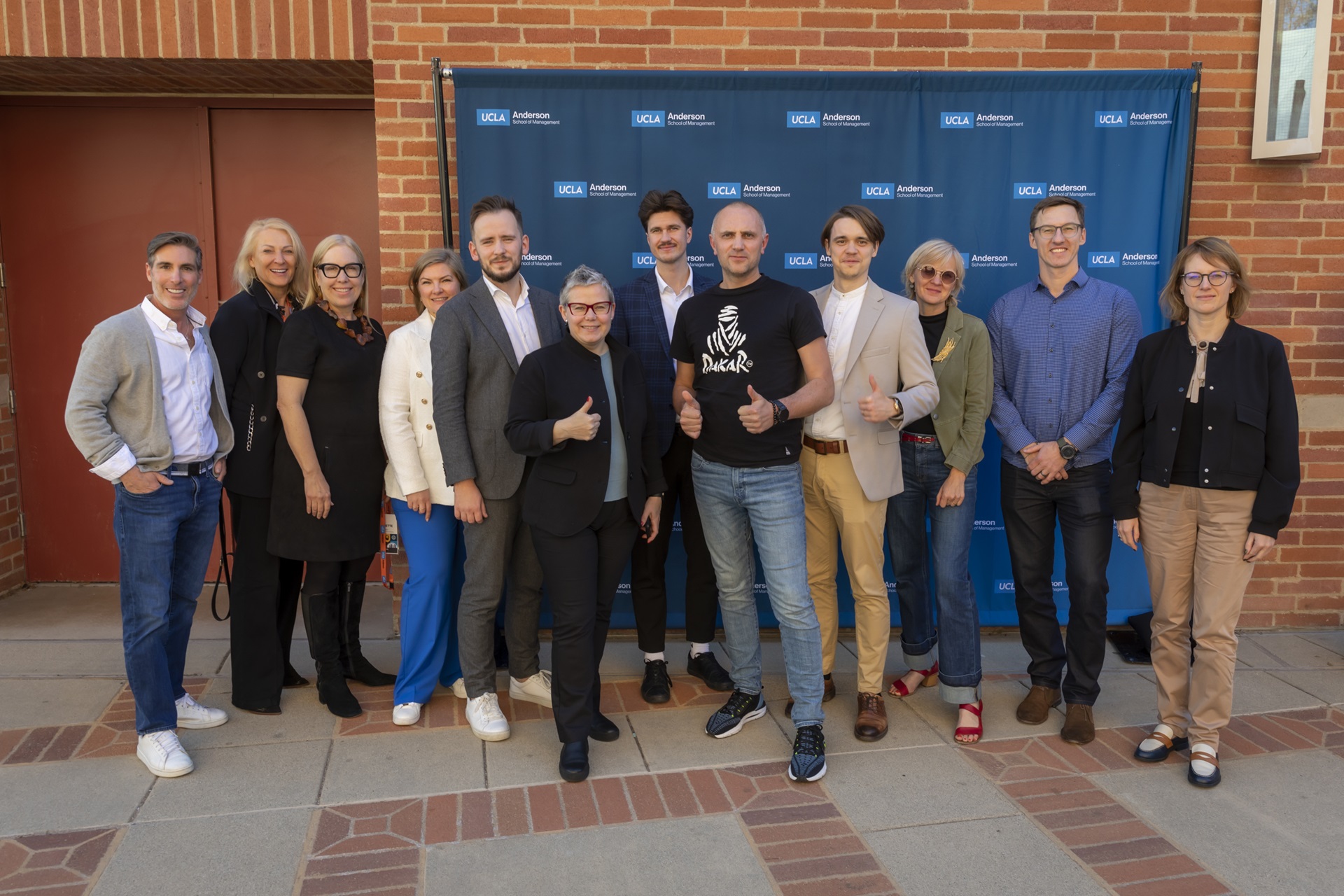

Shira Abel, mentor of the InnoHub Lithuania project by Innovation Agency Lithuania, startup marketing strategist and lecturer at the University of Berkeley, advises Lithuanians aiming to export to the U.S. to apply behavioral engineering. According to her, this field of psychology can become a powerful tool for optimizing marketing strategies and increasing sales.
“The U.S. is a highly attractive partner for Lithuanian exports. The U.S. economy remains remarkably resilient – even under challenging global conditions. Growth is driven by rising productivity and high domestic consumption, which accounts for as much as 70% of the gross domestic product. To operate in such a large market, it is crucial to focus on specific marketing strategies that help achieve results,” says Indrė Balčiūnaitė, Head of the International Partnerships Division at Innovation Agency Lithuania.
The Essence of Behavioral Engineering
According to the expert, behavioral engineering is based on a simple idea – certain emotions drive people to act. When planning marketing campaigns, it is important to understand which emotions and hormones influence the buyer and how to interact with them.
“We make decisions not only with logic but also with hormones,” explains Shira Abel. “For example, cortisol, also known as the stress hormone, suppresses creativity and decision-making, so it is wise to avoid stressful situations in marketing.”
Another important hormone is serotonin, associated with pride and status. “When a person feels important, they tend to be loyal to a brand,” she notes. The buyer’s sense of exclusivity can be enhanced by giving them a special status – for example, calling them a “platinum customer.”
Oxytocin, the hormone of love and trust, is released through physical contact, making it difficult to activate in the digital environment. That’s why in-person communication is extremely valuable. Meanwhile, dopamine, related to reward and motivation, is often stimulated in digital settings through rewarding interaction.
Norepinephrine, also known as the “fear of missing out” hormone, is triggered by creating a sense of urgency, such as limited-time offers.
Behavioral Triggers in Marketing
Shira Abel highlighted several psychological tactics that help evoke the desired audience reaction. One of them is anchoring – presenting a higher initial price so that subsequent offers appear more attractive.
Another is the foot-in-the-door technique – starting with a small request that prepares the customer for a larger one later. In digital marketing, this could be asking the user to leave feedback or answer a short question at the beginning of the sales process. The opposite method is the foot-in-the-face technique – making an unreasonably large request first, then offering a smaller, more acceptable alternative.
She also emphasized the principle of reciprocity: “If you give someone something valuable, they feel obligated to return the favor.” Other methods include priming, which associates a brand with positive emotions, and mere exposure, where repeated messages improve recall.
It is also important to avoid analysis paralysis – a situation where too many choices discourage the customer. According to Shira Abel, “Sometimes less is more – simplify the choices.”