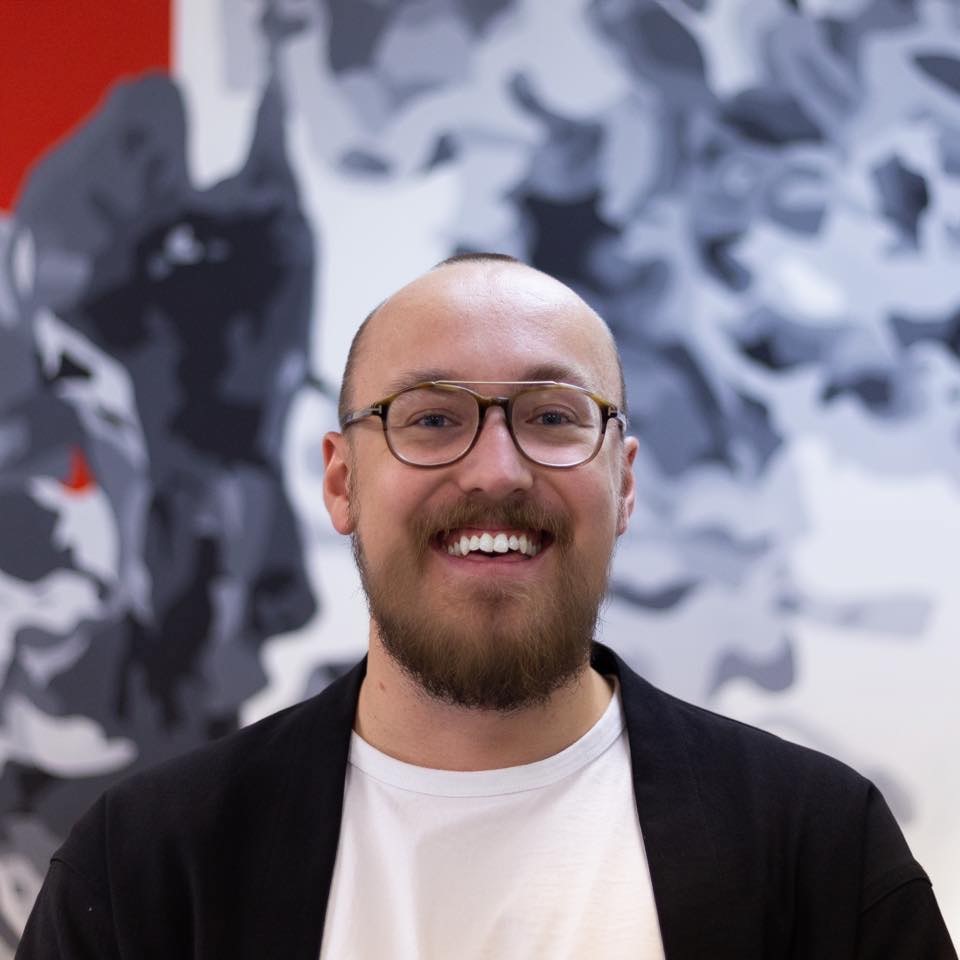

Innohub mentor Garrett Vygantas, MD, is not a typical venture capitalist. Blending sharp clinical insight with a knack for startup growth, he’s the driving force behind Riverine Ventures, a firm laser-focused on transforming healthcare and life sciences.
With two decades of experience spanning biopharma to digital health, Garrett doesn’t just invest capital – he dives deep, partnering closely with companies to navigate the complexities of product launches, fundraising, and market assessment. Before launching Riverine, he invested on behalf of The 4100 Group, OSF Healthcare, Jump Capital, and Burrill & Co. At NewBridge, he and his team raised over $60 million in financing and created $470 million in nominal value.
Garrett’s rare mix of physician know-how and business savvy makes him a powerhouse mentor and board member who knows how to turn bold ideas into game-changing realities.
From Physician to Entrepreneur
Your career journey has taken you from studying medicine to founding and investing in healthcare and life science companies. What inspired this transition from physician to entrepreneur and investor?
I have always sought to apply creative thinking to problem-solving. During my medical studies, I constantly took notes on potential solutions to the diseases we were studying in Pathology class, for example. Alas, in order to realise these solutions, capital formation is required.
To broaden my financial knowledge base and skill set adjacent to the field of medicine, I completed my MBA during medical school and also completed business-focused internships in biotech companies and on Wall Street. That background enabled me to gain a fundamental understanding of how medical products, therapeutics, diagnostic devices, and software are developed and paid for in the U.S. From there, I embarked on working with large and small companies to bring novel products to patients who would benefit from these innovations.
Having a background in medicine must be a significant advantage when working in the healthcare and life science sectors.
Of course, I’m biased, but I think a background in medicine is the greatest advantage when it comes to a career in healthcare and the life science sectors. It all starts with a deep understanding of disease, how it is diagnosed and currently managed, and where the gaps are that an innovation could take advantage of.
With your extensive experience, what are the biggest changes you’ve witnessed in these sectors over the past two decades?
Many changes have occurred over the past two decades, but the one I’ll focus on is the rapid adoption of AI and other tech tools in all aspects of healthcare and life sciences. Soon, the entire approach to how we learn and apply medicine will massively shift to become more efficient and precise. Burnout will be reduced, and patients will have the opportunity to participate to a greater degree in their own journeys. Very exciting times, no doubt.
What are the most pressing challenges facing healthcare and life science startups today, and how can they navigate these obstacles?
That is a broad question, so I’ll narrow it to smaller companies that have not reached profitability. The bar is higher for these companies to attain private capital, given the decreased venture capital funding sources. They will have to do more with less: rapidly develop their products, test them to obtain real-world evidence, and quantify the clinical and financial ROI of their solutions. From there, they can seek additional customers and investors. I’ve always found the best investors for my startups to be the customers who have used and valued the product and are bought into the value the company is working to bring to the system.
A Glance at Lithuania
Having worked in both the U.S. and global markets, how do you see Lithuania’s healthcare and life science ecosystem evolving? What strengths and opportunities do you see for Lithuanian startups in this space?
Despite having a small domestic market, the output of the Lithuanian life science ecosystem is impressive. I believe the strength is derived from solid technical and educational training and backgrounds. What is required is a deeper connection to the venture capital ecosystems of the EU and the U.S. to foster capital formation.
With the advent of various computing technologies, developing products is likely to become more efficient, more distributed, and hopefully less expensive. As such, Lithuania’s distance from the core EU and U.S. markets shouldn’t be as great an obstacle as before.
What motivated you to become a mentor, and what do you find most rewarding about working with healthcare entrepreneurs?
Since my medical training, and even before then, I’ve learned to be the mentee and then evolve to become the mentor. It’s important for entrepreneurs to have mentors who are not their managers to get candid and hopefully valuable feedback.
Success Has Many Fathers, but Failure Is an Orphan
Can you share a memorable success story from your mentoring experiences, perhaps a startup that made significant progress under your guidance?
I think just as memorable, or even more so, are the failures, not the successes. How does the saying go — success has many fathers, failure none? For a startup to become successful, so many pieces have to fall into place, and many of those are driven by external forces. After two decades of company building and investing in early-stage companies, I have amassed a sufficient amount of experience to be able to guide the management teams of my portfolio companies around potential land mines. I work on their behalf to unlock access to important nodes in my network.
Given your experience with fundraising and capital formation, what common mistakes do healthcare entrepreneurs make when seeking investment, and how can they improve their chances of securing funding?
Especially in today’s climate of uncertainty and self-inflicted economic contraction, entrepreneurs need to be able to do more with less. In conversations with investors, they need to show the value they have already created and how that scales with additional investment. In pre-revenue companies like therapeutics developers, they need to articulate what the white-hot risk experiment is and how funding that step can materially remove risk. Even then, it will be challenging — we are in a massive investment slump in biotech. But that is when the best companies are formed.
How did you and your team achieve such success at NewBridge, raising over $60M in financing and creating $470M in nominal value?
Hard work, the right timing, and of course, luck.
Prognoses for the Future
Looking ahead, how do you envision the healthcare and life science industries evolving over the next decade? What role will innovation play in shaping the future of these sectors?
There has never been a better time to launch a new healthcare-focused company that is centred on creating value for patients and improving how physicians do their work. The confluence of computing technologies and various skill sets, when done correctly, can make product development far more efficient and less costly. The same goes for commercialising healthcare products — finding ways to access key opinion leaders and effectively articulating the value proposition is now easier than before.